


As longtime collaborators, it’s unsurprising that The Weekly’s food director Fran Abdallaoui and columnist Julie Goodwin share many similarities in their approach to cooking.
This dynamic duo was onstage on Saturday to kick-off The Australian Women’s Weekly‘s Health Summit series in Sydney, held in partnership with Priceline Pharmacy, together with Blackmores and Colgate. And one of the crowd’s favourite parts of the day was their “Healthy Food with Fran and Julie” segment.
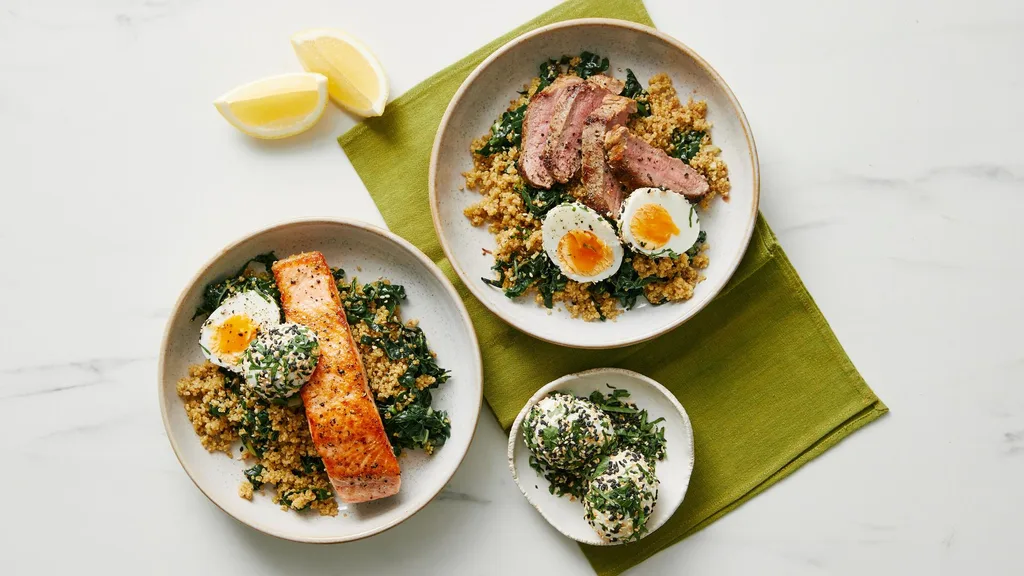
The pair made a delicious pick-your-protein bowl, together with event host Jess Rowe, with guests snacking on peanut butter stuffed dates (Fran’s take on a Snickers bar) throughout the event. In their segment, Fran and Julie shared some great cooking tips. Read on for the highlights.
If you’re keen to attend any of the future Health Summits, the schedule is: Melbourne on August 30, Gold Coast on September 13 (Fran will be joined by Magdelena Roze), Adelaide on September 27, and Perth on October 11.
The Adelaide Health Summit is set to be a bumper food edition with Melissa Leong and Maggie Beer joining panels, and Steph de Sousa, who will be cooking on stage!
Cooking tips from Fran and Julie
How to cook eggs
Test for freshness
Julie shares that she preps a lot of boiled eggs for easy snacking (and for getting in protein, as they have about 6g per egg) throughout the week. But she shared that the best way to test is fresh eggs are still good is by putting them in a bowl of water. If they stay at the bottom, they are good to cook and eat. If they float, it’s best to throw them out (or compost them, as she does).
How to boil an egg
As Fran was coating boiled eggs in toasted sesame seeds, Jess Rowe asked her for tips on how to best boil an egg… and the answer shocked the crowd! Fran advised that she adds room-temperature eggs to boiling water and not cold water. Julie added that she leaves her eggs in for five minutes, and then, if she’s using them in a salad, she will leave them in the shells so that the yolk gets jammy.
Should eggs be kept in the fridge?
On the topic of eggs, Julie doesn’t keep her eggs in the fridge! Of course, she said, for food safety, the ones in the supermarket are in the fridge, so it’s best to leave them refrigerated. But Julie has her own chickens who are about to start laying!
Vegetables & grains
Don’t throw away stems!
The recipe they were using called for silverbeet, a leafy green which Julie’s family grew on their farm when she was growing up! However, the stems of silverbeet can be very fibrous, so Julie advised cutting them off for this recipe. But Fran added that you shouldn’t throw them away, as they can be used in soups and bolognese as hidden veggies.
How to cook quinoa
Quinoa has all nine amino acids, which is rare for a plant food. Fran advised that the way to make it really delicious is by washing it really, really well and cooking it like absorption rice with water and bone broth. And what is bone broth? Julie explained that it is essentially a fortified stock that is made with bones.
Cooking meat
Testing when meat is done
When testing the doneness of meat, Jess asked if there was a way to do that without cutting up the meat. Julie said you can also push into the meat and feel the difference; there is a lot more give in underdone meat.
How to rest meat after cooking
Fran and Julie also advised that you should always rest meat before eating it. To keep it warm, Fran advised to put the meat on a warmed plate and cover loosely with foil. Don’t trap the steam in with the meat, as it will ruin the crust, Fran said!
Bonus cooking tips
Warm plates
While on the topic of warming plates, Jess asked if she could heat a plate in a microwave. Fran confirmed she could, if the plate was microwaveable, of course. She said to place a wet paper towel on the plate beforehand. Julie also added that she finds putting pasta in a cold bowl or plate makes the pasta cool down very quickly. So her tip is to pour boiling water from the kettle over the plate. Because it’s boiling, it will dry instantly, and the plate will be perfectly warm for pasta!
Local olive oil
They both touted the benefits of olive oil, but advised that we purchase Australian olive oil from the supermarket:
“In Italy, have the Italian, when you’re in Spain, have the Spanish, but they aren’t exporting the best to Australia,” said Julie. She also went on to explain that the goodness in olive oil can dissipate after six weeks, so buy a smaller bottle.
The sniff test
Fran also shared that your nose is the best test of whether something is safe to eat! If it smells bad, trust your nose and don’t eat it.
When life gives you lemons…
If you ever are in the position of giving Fran or Julie flowers, instead, opt for a bouquet of lemons! They always have a bowl of lemons at home, it’s perfect for adding some zest and flavour and vitamin C to your dishes.
Discover the best moments from the Sydney Health Summit here. Find out who the panellists are at future Health Summits here. And purchase tickets here.

